
Sterling silver, solid metal or brass?
Silver takes the best personalisation but tarnishes. Steel never tarnishes but personalises lighter. Brass is the warmest and the only one that visibly changes colour. Which is right depends less on price than on whether anyone will actually polish it.
Here is what each metal does over a year of real wear, without the marketing layer.
At a glance
| Sterling silver | Solid metal | Solid brass | |
|---|---|---|---|
| What it is | 92.5% silver, 7.5% alloy | Steel with chromium | Copper-zinc alloy |
| After a year | Tarnishes to yellow-brown; polishes back bright | Looks the same as day one | Darkens to deep gold-brown |
| Upkeep | Polish every 1–2 months | None | Polish to brighten, or leave it dark |
| personalisation | Deepest, crispest | Shallower, reads lighter | Deep and warm |
| Softness | Soft — scratches and dents | Hard — resists scratching | Middle |
| On skin | Generally fine | Generally fine | Can leave faint green on some skin when new |
| Best for | Kept and worn with care | Everyday, no fuss | Warm antique look |
Sterling silver: the best detail, the most upkeep
Sterling is 92.5% silver. It is the softest of the three, which is exactly why it takes the best portrait — the softer surface takes a deeper, crisper image.
The trade-off is tarnish. Silver reacts with sulphur in the air and darkens, faster in humid places and near wool, rubber or swimming pools. It comes off with a cloth and thirty seconds. If nobody will do that, the piece will just look dull after a year.
Choose silver if the portrait detail matters most and you do not mind polishing. Skip it if the piece will be worn in water daily.
Solid metal: nothing happens to it
An invisible oxide layer on the surface stops rust. It does not tarnish, does not need polishing, and survives a shower, a garden and a dishwasher.
Two honest downsides. The metal is hard, so the portrait is shallower — a fine portrait reads as a lighter line than the same portrait in silver. And it is not a precious metal, so it will never have the resale logic of silver. For a keepsake that is not really the point.
Choose steel if it will be worn every day, including in water, and you will never polish it.
Solid brass: the one that changes
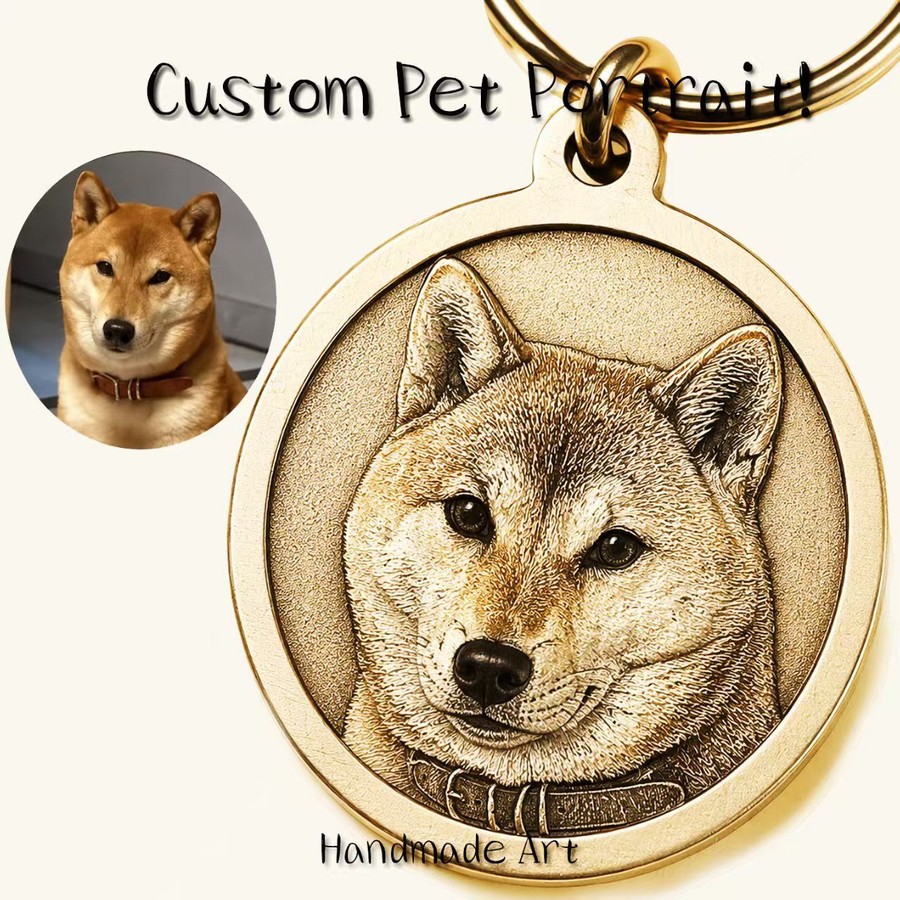
Brass is copper and zinc. New, it is bright gold. Within months it darkens to a deep bronze-brown — most people who like brass like it for that. A quick polish brings it back if you would rather.
The thing nobody tells you: on some skin, new brass leaves a faint green mark. It is the copper reacting with sweat, it washes off, and it is not the metal staining. It fades as the surface patinas.
Choose brass if you want warmth and an antique look, and you like the idea of it changing.
Two things that are not true
"Never tarnishes." Silver tarnishes. Only steel and plated metals do not, and plating eventually wears through.
"Safe for every skin." No metal is. Any metal can bother a particular person, and the word for it on a listing is marketing, not a standard. If you have reacted to jewellery before, tell us and we will steer you to solid metal, which has the fewest surprises.
What we actually use, by piece
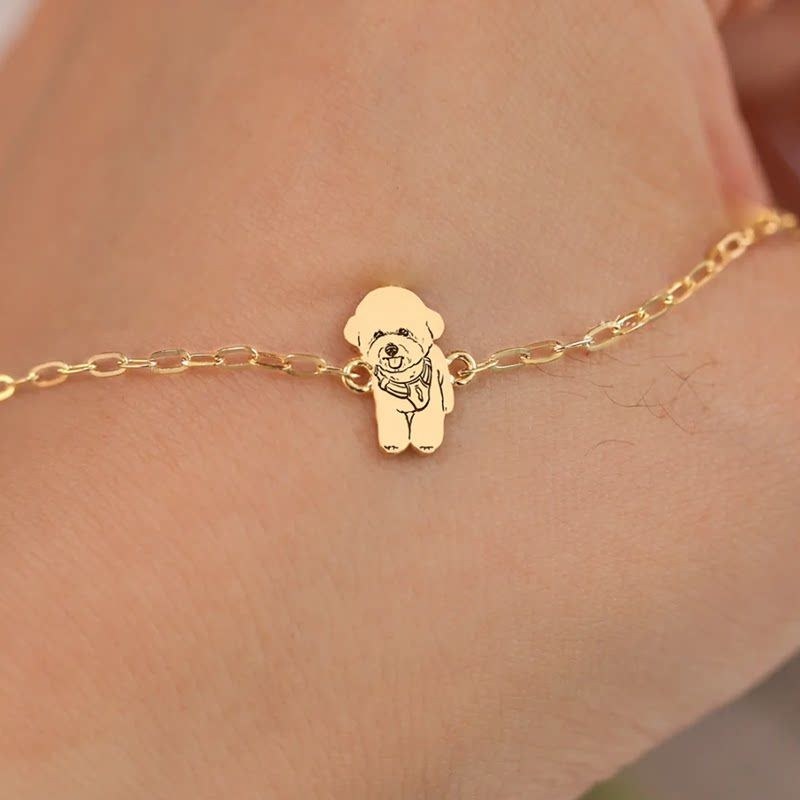
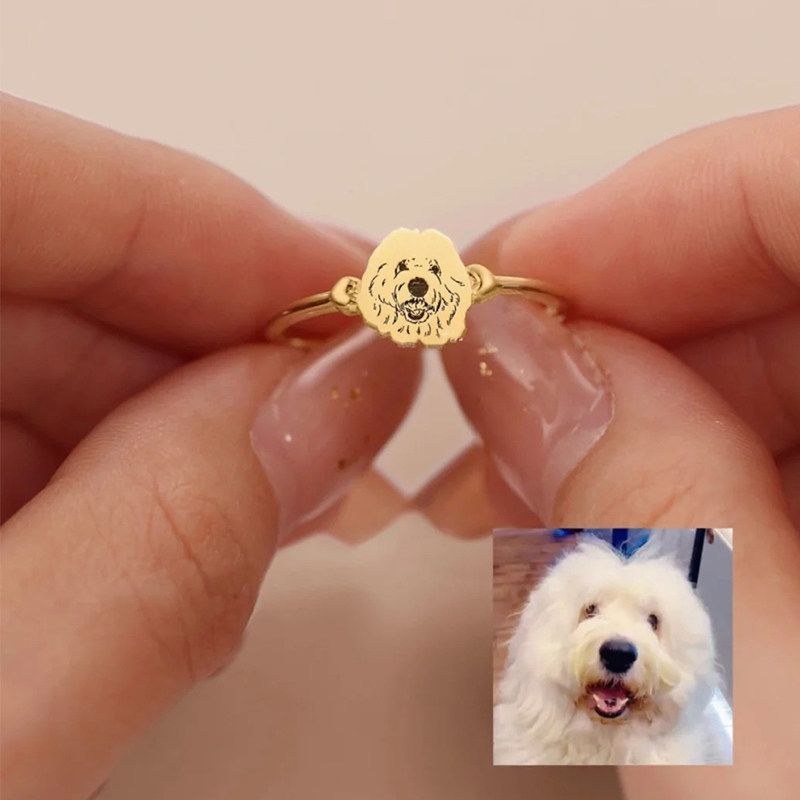
- Solid metal — photo pendant, portrait ring, hair keepsake keychain, collar hardware (titanium-steel buckle and D-ring)
- Solid brass — portrait tag, the ring on the leather plaque
- Leather — portrait plaque (Italian full-grain, vegetable tanned), bag holder, fur keychain
- Resin — figurine magnet, garden stone
The short version
- Want the sharpest portrait, will polish it → silver
- Wear it in the shower, never want to think about it → solid metal
- Like things that age and darken → brass
- No metal claims here that we cannot stand behind
Related reading
- How long does a custom pet memorial take to arrive? — real production and shipping times
- Can you return a personalized pet gift? — the 14-day window and how to cancel