
Talking to kids about pet loss
Children usually understand more than adults expect and less than adults fear. The difficulty is not the topic — it is that the explanation has to match a specific age, and the wrong wording can create a fear that outlasts the grief.
First, three phrases that backfire
"They went to sleep." A child who is told the animal went to sleep may become afraid of going to bed, or of watching a sibling sleep. This is the single most common mistake and the most avoidable.
"They went away / to a farm / on a trip." It implies return. Children wait, and the waiting turns into a second, quieter loss when they work out the truth.
"God took them because they were good." Whatever your beliefs, the logical extension a child makes is that being good leads to being taken — including them.
What works instead is plain and boring: "Their body stopped working and it cannot be fixed. They are not coming back. It is not because of anything you did."
By age
Under 5. The concept of permanence is not there yet. Expect repeated questions and repeated explanations, sometimes days apart. Answer the same way each time. Do not elaborate; short and true is the whole job. They will mostly register that the adults are sad.
6 to 9. This is the age of cause and effect, and where guilt appears most often — "I left the gate open", "I wished they would stop barking". Say explicitly that it was not their fault, more than once. They may also ask blunt, practical questions (what happens to the body, will it happen to me) that sound cold and are not.
10 and up. Usually close to adult understanding, but often excluded from it. Being told the truth — including that you are sad and that you do not have all the answers — tends to be better received than protection. This is also the age where they may cry alone rather than in front of you.
Letting them do something
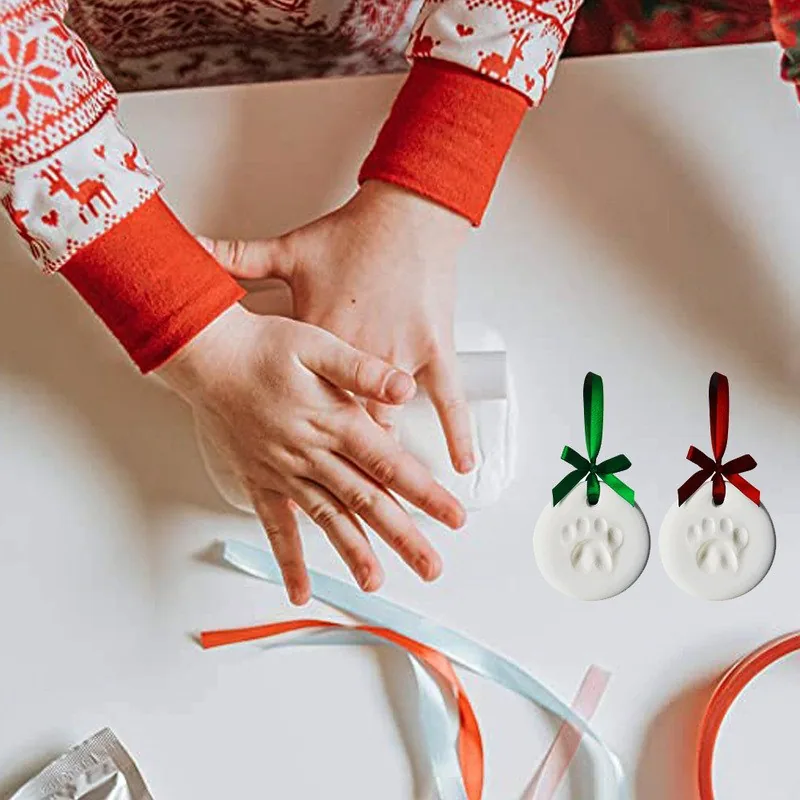
For most children, a conversation is the smaller half. The half that helps is doing — a drawing, a stone for the garden, a print of the paw, a photo put somewhere they chose.
The reason is not symbolic. Grief in children often comes out sideways, in play and in making, and an activity gives it somewhere to go that does not require finding words. It also gives them something they made rather than something that happened to them.
If you do one thing together, a paw print is a good choice: it is fast, it produces an object, and it can be done before or after the death if you have the kit already.
Practical things people forget
- Tell the school. A teacher who knows why a child is quiet will not push the wrong way. One sentence is enough.
- Do not tidy the animal's things away before they see them. Children often want to look at the bed or the bowl one more time, and being denied that is remembered.
- Expect regression. Bedwetting, clinginess, baby talk — brief returns to earlier behaviour are common and usually pass.
- Watch for the ones who do not react. A child who seems entirely unaffected for weeks is not necessarily fine; it sometimes arrives later.
If the animal died suddenly
With no warning, the first thing children usually need is to know it was not their fault, before they have asked. Say it unprompted. The second is to be told before they find out from someone else, even if the telling is clumsy.