
How long does grief last after losing a pet?
People ask this because they want a number, and the honest answer is that nobody can give one. But "it varies" is not useful either, so here is what the pattern usually looks like — and the reason it is worth knowing.
The first two weeks
Acute. Sleep is broken, appetite drops, the house feels wrong. Concentration is poor enough that driving and work suffer. This is not a sign of fragility; it is what an attachment system does when it loses its object.
Most people describe this period as happening to them rather than being something they move through.
One to three months
The acute phase lifts, unevenly. Good days appear, then a bad one arrives without warning — usually triggered by something small: a bowl in the back of a cupboard, a charge on a bank statement, a sound at the door.
This is the period where people around you stop asking, which makes it harder rather than easier. The grief has not reduced; the social permission to show it has.
Six months to a year
For most people, the shape of life has adjusted. The absence is still there but it is no longer the first thing on waking. Anniversaries and the first birthday without them tend to reopen it briefly, then it settles again.
A reasonable benchmark: if at a year you are functioning in the ordinary sense — sleeping, working, eating, seeing people — that is the normal path, and the missing does not go away so much as become something you carry rather than something that stops you.
Why "it varies" is still true
Several things reliably lengthen it: the death being sudden rather than expected, the animal having been the reason for getting up each day, a lack of anyone who acknowledges the loss, and previous losses that were never really processed.
And some things shorten it: someone who knew the animal and will talk about them, a routine that has to be kept, and — this one is well documented — the ability to say out loud that it mattered.
The 3-3-3 idea, and why it is not a grief rule
You will see "3 days, 3 weeks, 3 months" mentioned around pet loss. That framework comes from rescue dog adjustment — how long a rehomed animal takes to settle — not from bereavement. It gets repeated because it is tidy. It is not a schedule for grief, and treating it as one tends to make people feel late.
When it is worth talking to someone
Not "if it lasts longer than X". These are the markers that matter:
- You cannot function at work or behind the wheel months later, and it is not improving.
- You are avoiding anything that reminds you of them, including people who knew them.
- Sleep has not recovered and you are using alcohol to get through evenings.
- The thoughts have turned from missing them to not wanting to be here.
The last one is not a maybe. Pet loss is a recognised grief and it is treated as one — a GP or a bereavement service will take it seriously, and saying "it was only a dog" is not required.
One thing that helps more than it should
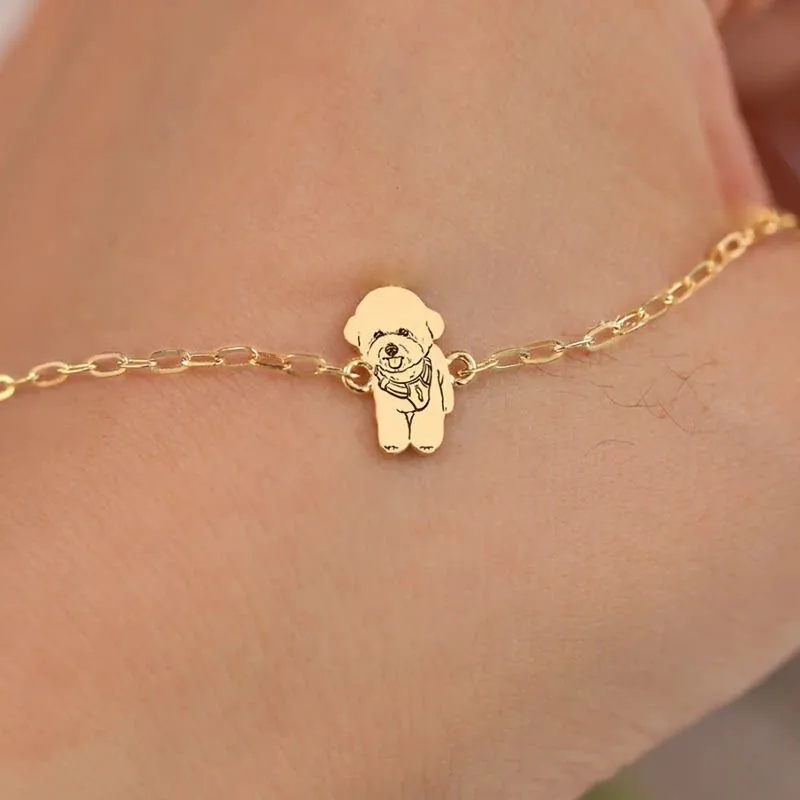
Talking about them by name, to someone who does not change the subject. That is most of what the first year needs. It is also why a small object that invites the conversation — a pendant, a photo, a tag on a keyring — does more work than it looks like it should.