
Personalized pet gifts that don't look cheap
"Personalized" is not a quality. It is a feature. A name printed on a thin disc is personalised, and it still looks like something from a fairground stall. What separates a piece people keep from one they quietly stop wearing is almost never the personalisation — it is five physical details.
1. The photo treatment, not the photo
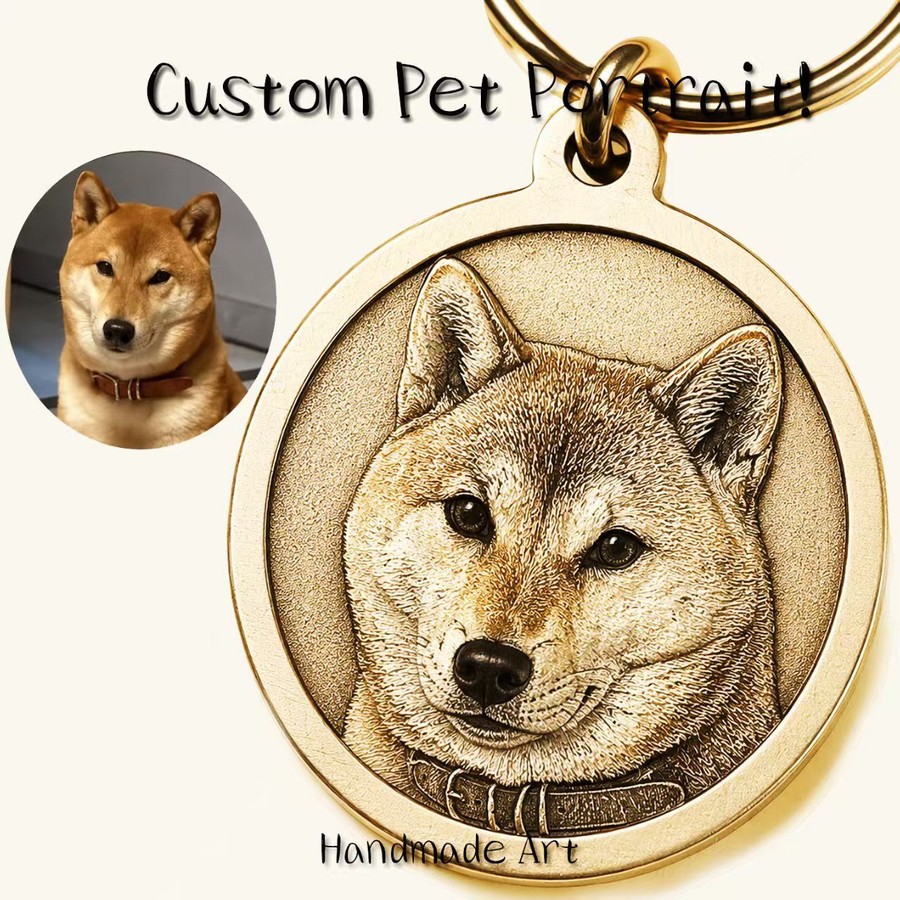
Everyone uses your photo. The difference is what happens to it afterwards. On a cheap piece the image is scaled down and applied directly: at 20mm across, the eyes become two dark smudges and the outline of the ear — the thing that actually identifies your dog — disappears.
Good work starts by looking at whether the photo survives the size. A maker who tells you "this one won't work at 20mm, send me another" is worth more than one who accepts everything.
2. Solid metal versus plating
Plating is a thin layer over a cheaper core. On a pendant that is worn daily, the high points — the edge, the loop, the raised face — wear through first, usually within a year, and the metal underneath shows as a dull patch or a green mark on skin. No amount of engraving or packaging hides that.
Solid brass, stainless steel or silver behaves differently: it scratches, it patinas, but it does not reveal a different metal underneath. If a listing does not say which it is, assume plated.
3. Thickness and weight
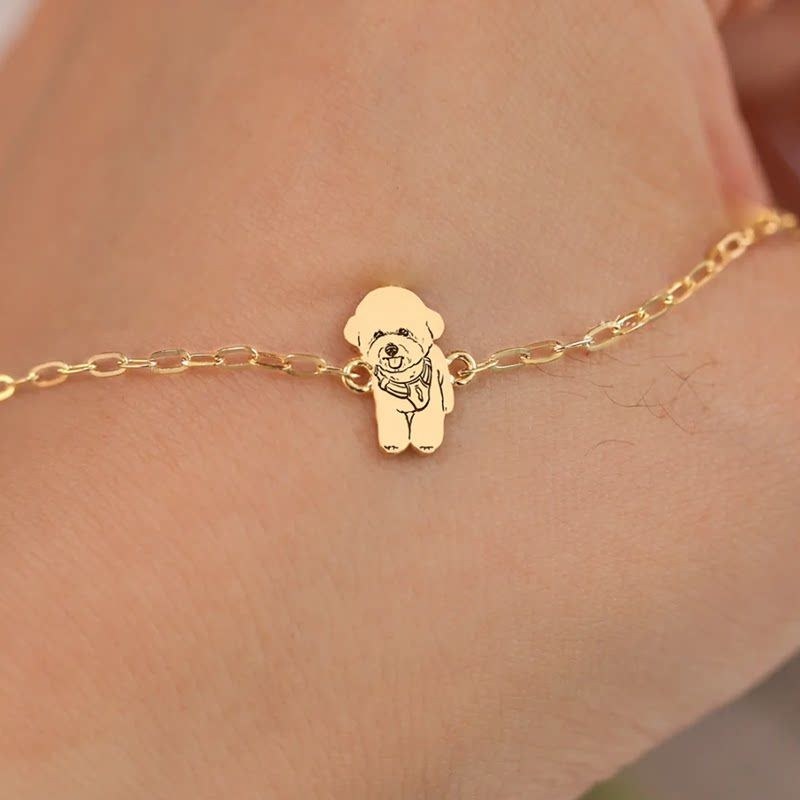
A piece that looks right in a photograph can feel like a coin in the hand. Thin metal flexes, dents at the edge, and hangs badly on a chain. Weight is the fastest physical test — a 25mm pendant that weighs almost nothing is not solid.
4. The finish on the back
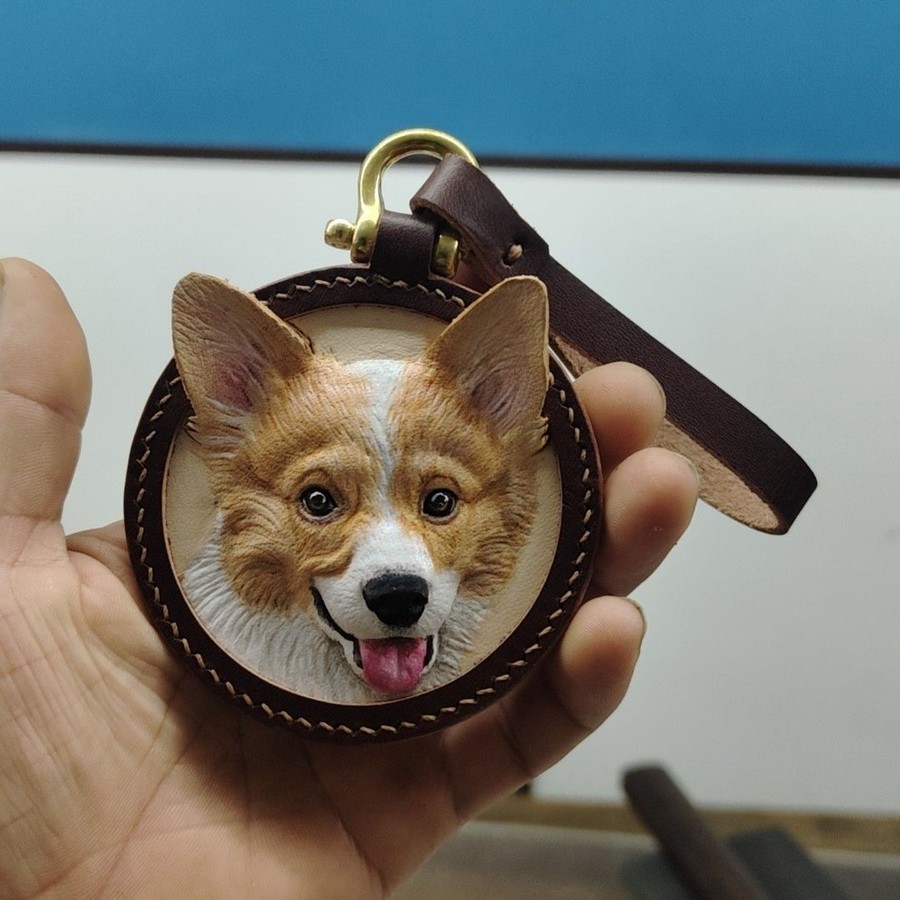
Nobody photographs the back. It is also where corners get cut: rough casting marks, a stamp slapped on, a chain loop soldered off-centre. A maker who finishes both faces is spending time on something the buyer will notice every time they take it off.
5. The edges
Run a thumb around the perimeter. A sharp or unfinished edge catches on clothing and skin, and it is the single most common reason people stop wearing a piece. Beveling and polishing an edge takes minutes per item, which is exactly why cheap production skips it.
What personalisation cannot fix
You can put a name, a date and a photo on almost anything. None of that compensates for a thin blank, a soft image or a sharp edge. If the base object is poor, more text makes it worse — it just looks busier.
The reverse is also true. A well-made plain brass tag with nothing but a name on it reads as considered. A busy, glossy, over-personalised piece reads as a souvenir.
What to ask before ordering
- Solid or plated? If plated, what is underneath?
- How thick is it, and what does it weigh?
- Can I see a photo of a finished order, not a render?
- What does the back look like?
- What happens if the likeness is wrong when it arrives?
Five questions, two minutes. They filter out most of what will disappoint you.
Questions people ask
How can I tell if a custom pet gift is good quality from a listing?
Is plated metal always bad?
Does more personalisation make a gift look better?
What is the most common quality problem in this category?
Related reading
- What a custom pet portrait actually costs
- Sterling silver, solid metal or brass?
- How to choose a pet memorial keepsake