
Pet memorial keychains
A keychain is the most-used object in this category. It comes out of a pocket or a bag several times a day, every day, for years — which is a much higher contact frequency than a framed photo or a plaque ever gets.
It is also the format that survives the least careful handling, so the material question matters more here than anywhere else.
Three keychains, three different contents
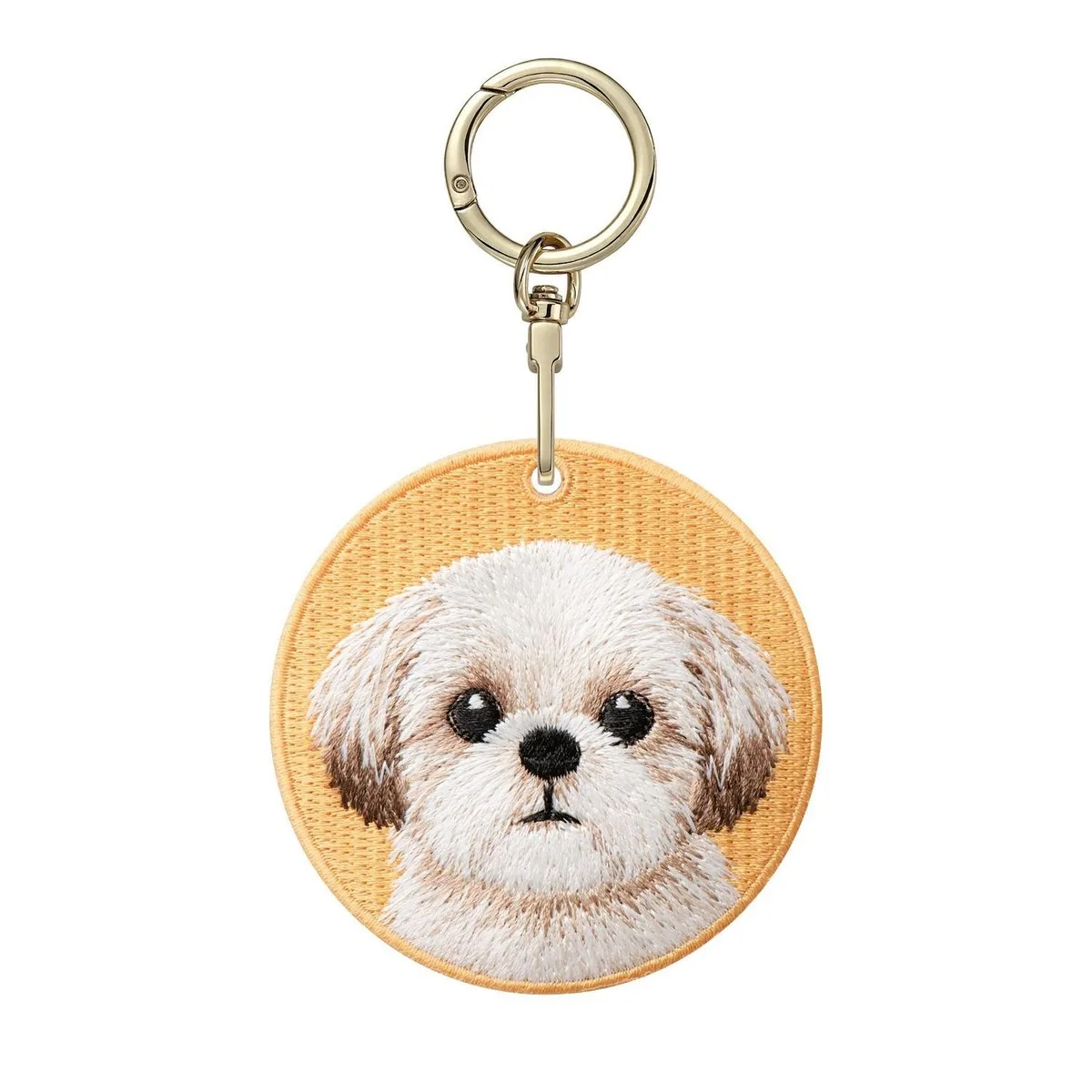
Embroidered photo. Your animal's face stitched in thread. It is the softest of the three and the only one where the image is built rather than printed — which means it does not crack or rub off the way a printed surface does, but it does pick up lint and can fray at the edge with very heavy use.
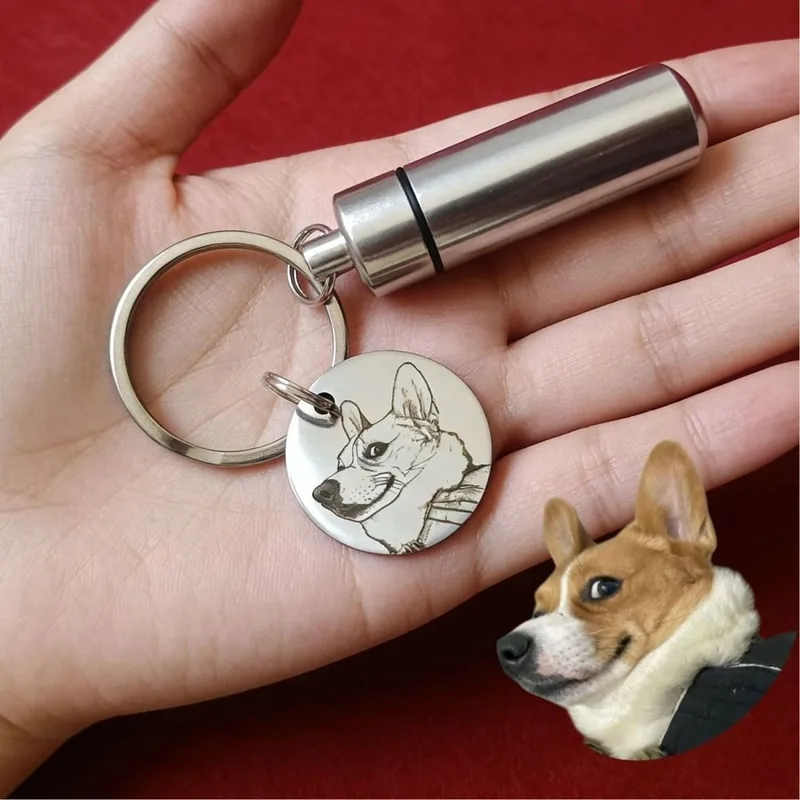
Fur keepsake. A small chamber that holds a clipping of coat, with the piece sealed around it. If you have fur from a brush or a groomer, this is the format designed for it. What matters is that the fur is dry when it goes in.
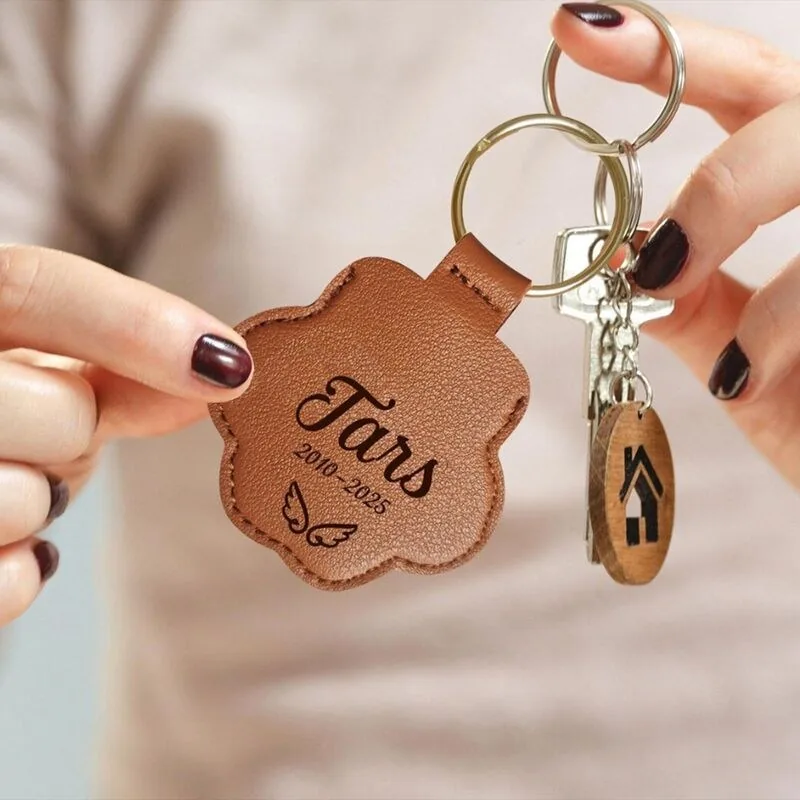
Name with hair. Their name, with a strand set into the piece. It reads as jewellery rather than as a tool, which makes it the one people tend to keep on their own keys rather than on a shared set.
What these survive, and what they do not
All three live next to keys, which are hard, sharp and constantly moving. That rules out anything with a printed photo surface, a soft coating, or thin plating — all of which fail first at the point where the piece rubs against the ring.
What works: solid metal bodies, a proper split ring rather than a thin loop, and stitching that is finished rather than cut flush. If a keychain has a thin wire loop instead of a split ring, that loop is what breaks.
On a bag instead of keys
Plenty of people clip these to a bag rather than a keyring, and it changes the wear pattern: less abrasion from keys, more exposure to weather and sunlight. If that is the plan, avoid anything with a fabric face — it will fade before it wears out.
Why this format over a necklace
Two reasons people choose a keychain. The first is practical: they do not wear jewellery, so a pendant would sit in a drawer. The second is that a keychain can be held — it is small enough to close your hand around, which is a different kind of comfort than wearing something.